
Introduction
For adults, 2 to 4 hours of recreational screen time per day is considered healthy, according to research from the American Psychological Association and multiple longitudinal studies. Beyond that threshold, risks increase for sleep disruption, anxiety, and reduced physical activity. But the type of screen time matters more than the total — passive scrolling is far more harmful than active use like video calls or creative work. Here's what the science actually shows.
This guide breaks down what the science says about healthy screen time limits.
The Research on Screen Time and Health
Mental Health Impacts
Studies consistently show concerning relationships between high social media use and mental health:
Depression and anxiety: People spending 3+ hours daily on social media have roughly 2-3x higher rates of depression and anxiety compared to those using 30 minutes daily
Sleep disruption: Evening screen time suppresses melatonin (your sleep hormone), disrupting sleep quality
Body image issues: Instagram and TikTok use specifically correlates with increased body dissatisfaction and eating disorders
Attention span: Heavy social media use is associated with reduced focus and difficulty concentrating
The Dopamine Effect
Remember from the addiction science: social media is designed to be unpredictably rewarding, which triggers dopamine release. This creates tolerance, meaning you need more engagement to get the same dopamine hit.
This is why there's no "safe" amount of social media. Your brain adapts. What started as 15 minutes daily can become 3 hours daily without you noticing.
Breaking Down Screen Time Categories
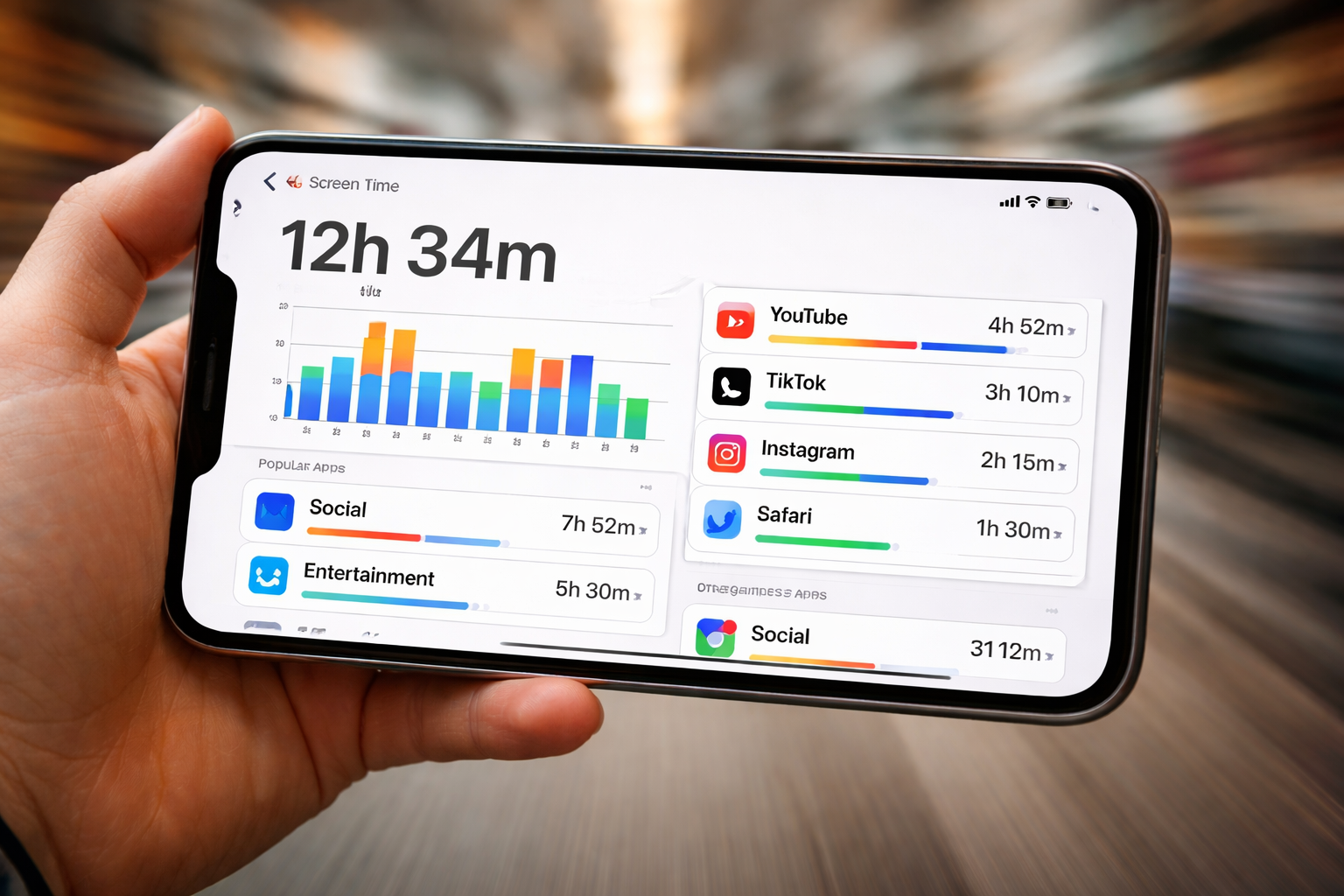
Not all screen time is equal. Here's what the research actually supports:
Work/Productive Screen Time
What it is: Work-related computer use, online learning, professional development Healthy limit: No strict limit, but take 20-20-20 breaks (every 20 minutes, look 20 feet away for 20 seconds) Why: Productive screen time provides value and builds skills Caveat: Still causes eye strain and posture issues
Educational/Learning Screen Time
What it is: Online courses, informational content, skill-building Healthy limit: 2-3 hours daily (with breaks) Why: Provides cognitive stimulation and value Caveat: Quality matters. TED talks are different from TikTok
Social Media/Consumption
What it is: Instagram, TikTok, Facebook, Twitter, Reddit (for scrolling) Healthy limit: 30 minutes daily maximum Why: The research is clear—more than this shows measurable mental health impacts Reality check: Average adult uses 4+ hours daily. This is a significant reduction.
Entertainment (Videos, Games)
What it is: YouTube, streaming TV, video games Healthy limit: 1-2 hours daily Why: Entertaining but passive. Can interfere with sleep and face-to-face connection if excessive Caveat: Games and video requiring active problem-solving are better than passive TV consumption
The 80/20 Rule: A Practical Framework
Instead of obsessing over exact numbers, here's a practical framework:
80% of screen time should be:
Productive (work, learning)
Connected (messaging, calls with real people)
Creative (making things, not just consuming)
20% can be:
Entertainment (movies, games, casual content)
Social media (but limited and intentional)
Example: If you're awake 16 hours, that's ~8 hours of potential screen time.
6.4 hours could be work, learning, real connection
1.6 hours could be entertainment/social media
This is more realistic than "30 minutes of screen time total."
The Evening Window: Most Critical
The biggest health impact of screen time happens in the evening, 2+ hours before bed.
Why: Blue light from screens suppresses melatonin production. Evening social media use also stimulates your brain when it should be winding down.
The research: People who use screens 2+ hours before bed have:
45% higher rates of insomnia
Reduced sleep quality
Takes 30-60 minutes longer to fall asleep
2-3 fewer hours of deep sleep
Practical limit: No screens 1-2 hours before bed. This single change often improves sleep quality more than anything else.
The Context Matters
Your healthy screen time also depends on:
Life stage:
Young children (0-2): No screen time
Children (2-5): Max 1 hour high-quality content daily
Teenagers: 2-3 hours if managed well, up to 5-7 if unmanaged
Adults: Varies by work, but social media should be minimal
Older adults: Screen time less concerning; isolation is the bigger risk
Work requirements:
Software developer: 8 hours screen time is necessary
Teacher: 3-4 hours screen time during work
Writer: 5-6 hours screen time during work
The key: Have screen-free breaks and evening boundaries
Current mental health:
Depression/anxiety: Lower limits are critical (30 min social media max)
ADHD: Screen time can worsen focus; needs breaks
Good mental health: More flexibility, but still avoid excessive social media use
Red Flags: When Your Screen Time Is Too High
You check your phone within 5 minutes of waking
You can't go 30 minutes without checking social media
You scroll right before bed or in bed
You check your phone during meals or conversations
Your sleep is disrupted
You feel anxious when you can't access your phone
Your mental health has deteriorated in the past year of heavy use
If multiple of these apply to you, your screen time is likely too high.
Making It Practical
Rather than a strict number, focus on these shifts:
Reduce evening use: The #1 lever for better sleep
Eliminate social media notifications: Reduces unconscious checking
Create phone-free times/zones: Protects meals, sleep, and relationships
Track it consciously: Use screen time apps as awareness alone reduces use by 15-20%
Replace, don't restrict: Have something you'd rather do
The Individual Experiment
Here's the truth: everyone's optimal screen time is slightly different. The research gives us general guidelines, but your optimal amount depends on your temperament, job, and life.
The experiment: For one week, track your screen time and your mood/sleep/focus. Then reduce social media by 50% and observe what happens. Did your mood improve? Did you sleep better? Did you focus better?
Your own experience is the best guide.
The Bottom Line
Social media: 30 minutes daily maximum for mental health
All screen time: No strict limit, but quality and timing matter
Evening screens: The most damaging; avoid 1-2 hours before bed
Work screens: Not concerning if you take regular breaks
Start with one change: protect your evening. The improvements in sleep, mood, and focus will convince you that reduced screen time is worth it.
For a deeper understanding of social media's impact on your brain and comprehensive strategies for changing your relationship with screens, read our cornerstone guide: "How to Reduce Social Media Addiction: A Science-Backed 30-Day Challenge," which covers dopamine dysregulation, addiction types, and proven strategies for sustainable change.
Ready to optimize your screen time? Join others taking control of their digital wellness on Together With Kai.