
Both Can Be True, part 12 of 12. Start with the series introduction.
"The best way out is always through." Robert Frost, A Servant to Servants (1914)
The moment
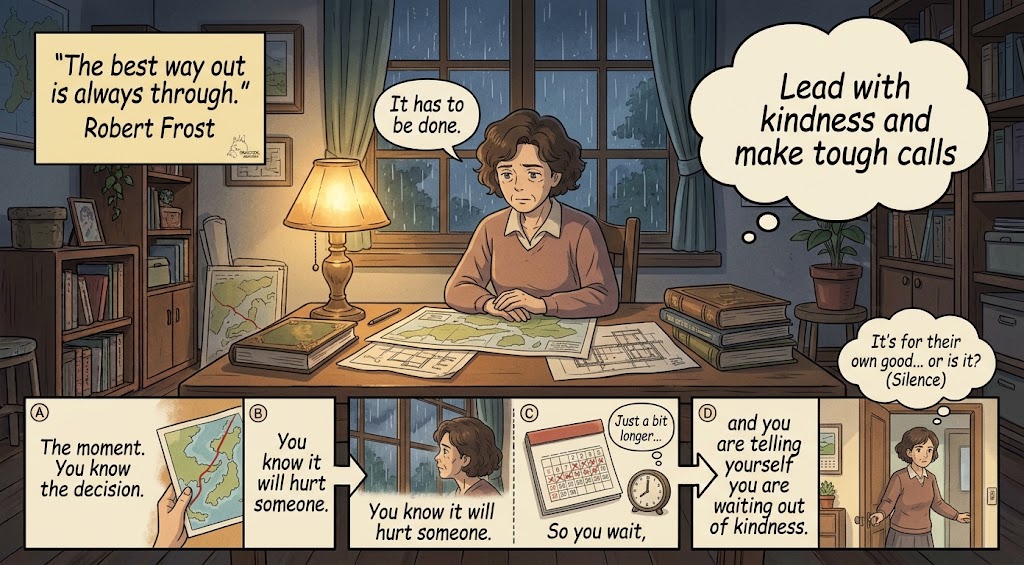
You know the decision. You know it will hurt someone. So you wait, and you are telling yourself you are waiting out of kindness.
What is actually happening
You are, usually, avoiding your own discomfort and describing it as care for theirs.
This one is worth being direct about, because it is the most expensive mistake on the list. The delay does not remove the pain. It moves the pain later and adds to it: the person who is let go three months late has lost three months of job hunting, the team that keeps a broken arrangement pays for it daily, and everyone involved learns that difficult things do not get said here.
The distinction that resolves it
Back to the difference between feeling with someone and caring for someone, from Post 2. Shared distress makes people withdraw, because the fastest route out of your own pain is away from its source. Compassion, meaning genuine care without absorbing the state, was associated in that same research with more helping, not less.
Apply that to decisions and you get something clear. If you are absorbing how bad the person will feel, you will avoid the decision to protect yourself. If you care about them without absorbing it, you can do the hard thing and do it well.
Kindness is not the absence of the hard call. It is where the hard call lands: in the timing, the honesty, the privacy, the practical help, whether they hear it from you or from a rumour.
What kind actually looks like here
Fast, clear, in person, no false hope, no long preamble that lets them work it out mid sentence. Then real support attached: notice, references, help, honesty about what you would say to someone who asks. Every part of that is where kindness lives.
Compare it to the alternative that feels kinder in the moment: hints, delays, a softened message they misread, and finding out later that you had decided weeks ago. That is not kind. It just cost you less at the time.
The honest caveat
This is not permission to be blunt and call it integrity. Plenty of people deliver bad news badly and then defend it as courage. The test is whether the difficulty landed on you or on them. If the hard part was theirs to absorb while you got the relief of having said it, you did the easy version.
Try this week
Find the decision you have been calling patience. Ask honestly whose discomfort the delay is protecting. If the answer is yours, you already know what to do, and doing it kindly is a matter of how, not whether.
Provided by Kai