
Introduction
Artificial intelligence will affect humanity in three major ways: it will transform how we work (automating 30-40% of tasks by 2030), how we connect (AI companions are already used by millions), and how we make decisions (from medical diagnosis to legal research). The real question isn't whether AI will change everything — it already is. This article examines the research, the risks, and the realistic outlook for AI's impact on human life.
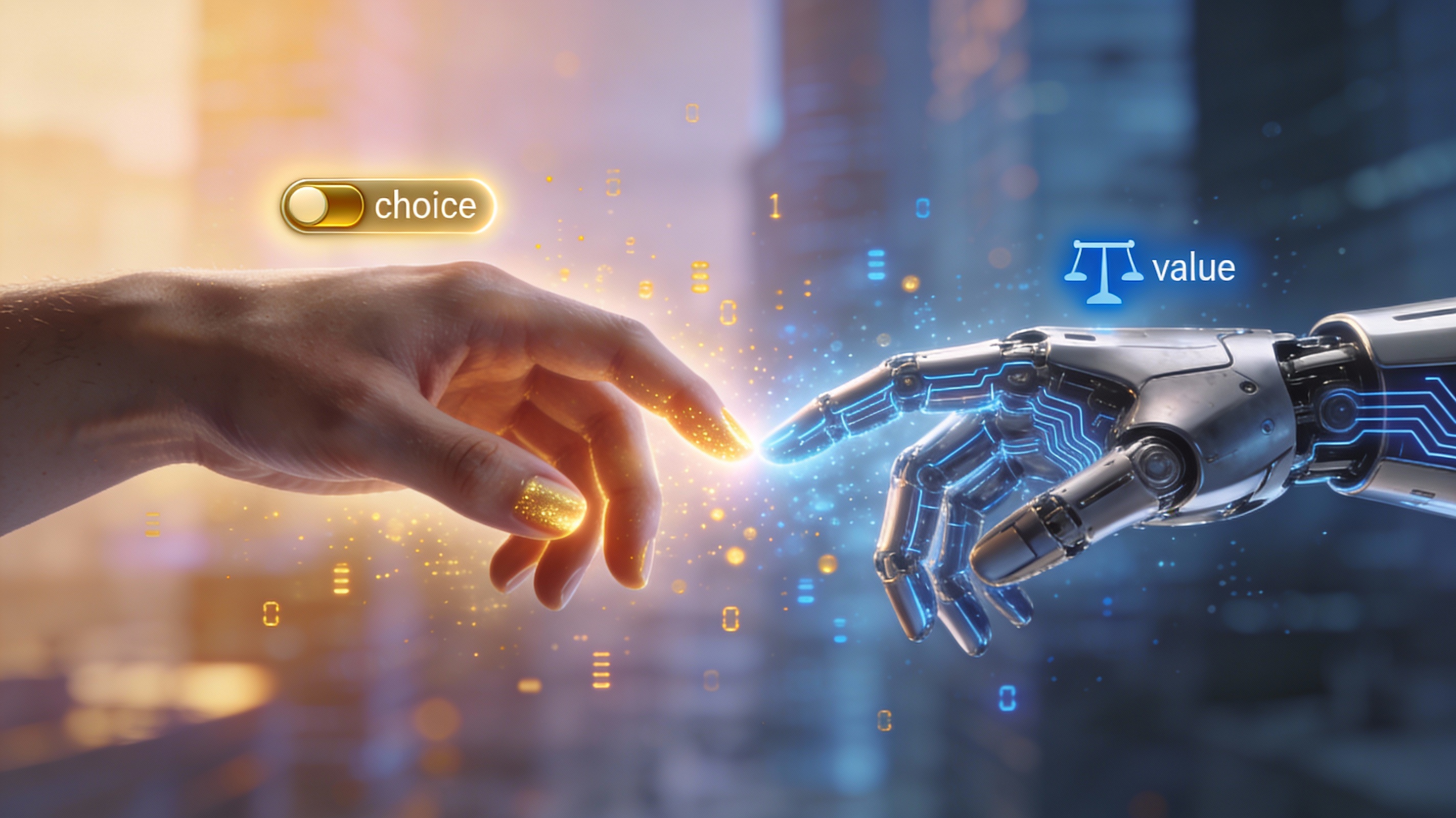
How AI Is Already Changing Humanity
We often talk about AI as a future technology. However, its effects are already here, and they are shaping how we think, connect, work, and relate to ourselves and one another.
The Immediate Impacts We're Experiencing
1. Algorithmic Decision-Making in Our Lives
AI systems now decide:
Whether you get a job (hiring algorithms screen candidates before humans see them)
Whether you get a loan (credit scoring algorithms)
Who goes to prison and for how long (criminal sentencing algorithms)
What your insurance costs (predictive health algorithms)
What medical treatment do you receive (diagnostic AI)
What news do you see (recommendation algorithms)
Who you're matched with romantically (dating algorithms)
A concerning pattern emerges here; these systems amplify existing biases, operate as black boxes (even their creators don't understand how they reach conclusions), and remove human judgment from decisions that affect human lives.
2. Reduced Human Agency and Autonomy
As AI recommendation systems improve at predicting what you want, what you should do, what you should buy, and what you should think, humans too increasingly defer to the machine.
The problem isn't that the AI is wrong. It's that consistent deference that erodes your own judgment capability. If GPS gives you directions, you stop learning your way around the city. If algorithms curate your feed, you stop exploring ideas. If AI writes your emails, you stop developing communication skills.
Researchers warn this creates what they call "cognitive outsourcing.” We're replacing the capacity to think with the convenience of letting machines do the thinking for us. Younger generations show lower critical thinking skills and higher dependence on external guidance, partly because they've never had to develop independent judgment.
The danger: autonomy atrophies when unused. A generation that doesn't practice thinking becomes a generation that can't.
3. Atomization and Polarization
AI-powered recommendation algorithms optimize for engagement. What engages people most? Content that triggers emotions such as outrage, fear, or validation of existing beliefs, as well as content that triggers FOMO.
The result: algorithms create the perfect echo chambers. You primarily see content that confirms your worldview, gets algorithmically amplified based on engagement metrics, and becomes increasingly extreme over time. People living in the same city occupy completely different informational universes.
This isn't accidental. It's algorithmic. And it's fragmenting society at precisely the moment we need greater understanding.
4. Erosion of Empathy and Social Awareness
Extended time in digital spaces optimized for metrics can reduce face-to-face interaction, which is where empathy typically develops. You build empathy through reading human expressions, navigating social nuances, and experiencing the consequences of hurting others firsthand.
Online, none of those elements exist. You're interacting with usernames, not humans. Your words don't immediately reflect in someone's face. The feedback loop that teaches social awareness is broken.
Research indicates that individuals who spend a significant amount of time in AI-mediated environments exhibit decreased empathy, reduced emotional attunement, and increased dehumanization of people with whom they disagree.
5. Loss of Agency in Knowledge and Expertise
ChatGPT can write essays. Midjourney can create images. GitHub Copilot can write code. DeepMind can solve protein folding.
The technology is remarkable. However, it's creating a concerning trend: people stop learning skills because they believe "AI can do it."
Why learn to code? "AI can code better." Why learn to write? "ChatGPT can generate text." Why learn to think deeply? "AI can think faster."
This represents a fundamental misunderstanding of skill development. You don't learn coding to beat machines at coding. You learn it to understand problems, develop thinking, and create systems. The process of learning builds capabilities that have nothing to do with the output.
But as AI makes the outputs easier, fewer people engage with the process. This means fewer people develop expertise, engage in deeper thinking, or acquire the capability to understand and evaluate these very AI systems.
The Genuine Risks Ahead
Not all risks from AI are speculative or distant. Some are immediate.
The Real, Immediate Risks
1. Algorithmic Bias and Amplified Inequality
AI systems are trained on historical data. Historical data contains human biases. Therefore, AI systems inherit and often amplify those biases.
Examples we've documented:
A hiring algorithm that discriminated against women
A medical algorithm that systematically underdid healthcare recommendations for Black patients
A criminal sentencing algorithm that recommended harsher sentences for minorities
Loan approval algorithms are denying credit to specific demographic groups
This pattern emerges because these systems are treated as "objective" (they're math, after all), they're trusted more than human judgment, and their biases are implemented at scale before anyone notices.
The risk: AI is being rapidly deployed in high-stakes domains (such as hiring, criminal justice, healthcare, and lending) without adequate testing for bias, and without proper accountability when biases are discovered.
2. Mass Displacement and Economic Disruption
AI is expected to displace a significant number of workers. The question isn't if, it's how many and how quickly.
Roles at risk: data entry, basic coding, customer service, medical diagnosis, legal research, accounting, content writing, and others.
However, unlike previous technological revolutions (such as the Industrial Revolution and the Digital Revolution), AI displacement is happening faster, across more sectors simultaneously, and affecting white-collar and creative workers, not just manual laborers.
The current policy response? Nearly nonexistent. We have no retraining systems, no economic transition plans, and no serious discussion of how people displaced from work can maintain their dignity, purpose, and economic security.
The risk: massive unemployment in certain sectors before alternatives are established, leading to social instability and human suffering.
3. Surveillance and Loss of Privacy
AI enables surveillance at a scale previously impossible. Facial recognition, gait recognition, and behavioral prediction; technologies that can identify and track individuals in real-time.
Combine this with government or corporate control, and you create the infrastructure for unprecedented monitoring and control.
China is already using these systems. Western democracies are quickly adopting them for "security." However, historical experience shows that surveillance infrastructure created for security inevitably gets used for control.
The risk: a future where no privacy exists, where your movements are tracked, your associations are monitored, and your behavior is subject to algorithmic evaluation and intervention.
4. Misaligned Optimization and Unexpected Consequences
AI systems optimize for what they're explicitly told to optimize for. But the real world is complex, and optimizing for one metric often creates perverse consequences.
Classic example: a hospital implemented an algorithm to predict which patients would no-show for appointments (to optimize scheduling). The algorithm learned to predict based on racial demographics, effectively filtering which patients got appointments based on race.
The system was "accurate" at predicting no-shows. It was racist in impact. No one programmed it to be racist. The bias emerged from optimization.
This problem becomes exponentially more challenging with increasingly complex systems and larger scales. An AI system optimizing for "engagement" creates echo chambers. An AI system optimized for "profitability" can create exploitative practices. An AI system optimized for "security" can become oppressive.
The risk: sophisticated AI systems creating harmful outcomes no one explicitly intended or predicted.
5. Concentration of Power and Loss of Human Judgment
The most powerful AI systems are controlled by a small number of large corporations and government entities. This concentration of power is a risk in itself.
As these systems become more adept at making decisions, decision-making power shifts to those who control the systems. This erodes democratic participation, expert authority, and individual agency.
We're moving toward a world where major decisions (hiring, resource allocation, information propagation, even justice) are made by algorithms controlled by distant corporations and governments, with little human oversight or appeal process.
The risk: a technological oligarchy where power is invisible, unaccountable, and based on control of AI systems rather than democratic participation.
The Real Opportunities
AI isn't all evil. It's a tool, after all. And tools can be used to build or destroy, empower or control.
The opportunities are genuine and massive as well, but what they require is intentional development.
AI for Genuine Human Flourishing
1. Democratized Knowledge and Education
AI tutors that adapt to each student's learning style could provide quality education to millions who lack access. Personalized learning paths could help each person develop according to their potential.
Imagine: a world where anyone, anywhere, can access education tailored to their learning style, pace, and goals. Not through screens, but through interaction. This could reduce inequality more than any policy intervention in history.
Current reality: Most educational AI systems optimize for engagement metrics and time-in-app, rather than learning. But the potential remains.
2. Accelerated Scientific Discovery
AI is helping us understand protein structures, drug interactions, and genetic diseases. It's accelerating solutions to problems that have stumped human researchers for years.
Imagine: AI helping us develop treatments for diseases that have no cures. AI helping us understand climate science and develop carbon capture technologies. AI advancing energy research, material science, and biological understanding.
This is already happening. It could also dramatically improve human health and environmental well-being.
3. Accessibility and Capability Expansion
For individuals with disabilities, AI offers unprecedented capability expansion. Voice-controlled interfaces for people with mobility limitations. Computer vision for people with visual impairments. Predictive text and autocomplete for people with cognitive or motor limitations.
Imagine: technology that not only accommodates disability but also expands human capability beyond typical norms.
4. Augmentation Rather Than Replacement
The best use case for AI isn't the replacement of human judgment, but augmentation. AI performing routine work (data analysis, document review, basic diagnosis), freeing humans for complex tasks (strategy, relationship, creativity, value judgments).
Imagine a surgeon using AI assistance for the routine aspects of surgery, reserving their expertise for the complex decisions. A lawyer using AI to review documents, keeping their judgment for legal strategy. A teacher using AI to handle routine grading, keeping their energy for connecting with students.
This could make human expertise more valuable, not less. However, only if AI is designed as an augmentation, not a replacement.
5. Automation of Suffering
Many human tasks are necessary but cause suffering, such as repetitive, dangerous, and degrading work. AI could automate these tasks, freeing humans for creative and meaningful work.
Imagine: AI handling repetitive accounting tasks, freeing humans to focus on strategy. AI doing dangerous mine work, freeing humans from risk. AI doing the work that feels demeaning, freeing humans to focus on dignity.
The Ethical Framework We Need
The question isn't whether AI will shape humanity; it's whether humanity will shape AI. It will. The question is: what principles should guide that shaping?
Six Essential Ethical Principles for AI Development
1. Respect for Human Autonomy and Agency
AI should enhance human capability, not replace human judgment in important decisions. Humans should maintain meaningful control over decisions that affect their lives.
Practical application:
AI can analyze medical data, but doctors make treatment decisions
AI can screen job candidates, but humans make hiring decisions
AI can recommend content, but humans choose what to engage with
AI can predict risk, but humans decide on intervention
2. Fairness and Non-Discrimination
AI systems must be regularly tested for bias and audited to ensure they are free from bias. Algorithmic decision-making should never be hidden from those it affects.
Practical application:
Algorithms used in high-stakes domains (hiring, lending, criminal justice, healthcare) must be auditable
Bias testing should be mandatory before deployment
Those affected by algorithmic decisions should have the right to explanation and appeal
Discrimination through algorithms should face the same legal consequences as overt discrimination
3. Transparency and Explainability
People affected by AI decisions have a right to understand why decisions were made.
Practical application:
"Black box" algorithms shouldn't be used in high-stakes domains
When you're denied a job, a loan, or treatment, you should know why
Algorithm creators should be able to explain their systems' logic
Regulatory bodies should audit how algorithms actually work (not just what their creators claim)
4. Privacy and Data Protection
AI systems should not surveil people or control information about them without consent.
Practical application:
Strict limits on data collection
Strong privacy protections for personal information
Regulation of facial recognition and behavioral tracking
Right to delete your data
Heavy penalties for misuse
5. Accountability and Governance
Someone must be responsible when AI systems cause harm. Currently, this is murky. A hospital can implement a biased algorithm and claim "we didn't know."
Practical application:
Clear legal responsibility for AI outcomes
Regulatory oversight of high-stakes AI systems
Mandatory impact assessments before deployment
Recourse for people harmed by AI systems
Public-private governance (not just corporations deciding)
6. Alignment with Human Values
AI systems should be designed to support human flourishing, not just efficiency or profit.
This is the most challenging principle because it requires defining what human flourishing means. The alternative, which is letting AI be optimized purely for engagement, profit, or state control, guarantees misalignment.
Practical application:
Human values input in AI design (not just engineers)
Democratic input into which problems AI should solve
Optimization for human wellbeing, not just metrics
Protection of work's dignity and purpose
Preservation of human skills and capabilities
What You Can Do (Concrete Actions)
Understanding the risks and opportunities is necessary, but it is also insufficient. Change requires action.
Individual Actions
1. Build Technological Literacy
Understand how AI and algorithms work. You don't need to code, but you should understand:
How recommendation algorithms create filter bubbles
How algorithmic bias emerges
What "training data" means and why it matters
How your data is collected and used
How to spot AI-generated content
Resources:
"Weapons of Math Destruction" by Cathy O'Neil
"The Algorithm Illusion" documentaries
Coursera courses on AI ethics
"How Smart Machines Think" by Sean Gerrish
2. Question Algorithmic Decisions
When you notice AI affecting your life, question it:
Why did I get denied for that job? What was the algorithm measuring?
Why am I seeing this content? What algorithmic logic is behind it?
How is this algorithm biased?
Companies count on you not knowing. Awareness itself is power.
3. Protect Your Data
Your data is the fuel for AI systems. Protecting it limits their capability:
Limit social media sharing
Use privacy tools (VPN, encrypted messaging)
Avoid convenience tech (smart speakers, facial recognition) when possible
Demand data deletion rights
Opt out of data selling when possible
4. Support Human Expertise
As AI can write and create, we can consciously choose human work:
Read human-written journalism instead of AI-summarized content
Hire human illustrators, writers, and designers instead of using AI generators
Support human teachers, therapists, and advisors instead of AI substitutes
Vote with your attention and money for human expertise
This isn't about Luddism. It's about maintaining human capability and skill development.
5. Engage Politically
Individual actions matter, but systemic change requires policy:
Vote for politicians who take AI regulation seriously
Support organizations working on AI ethics and policy
Advocate for transparency and accountability in algorithmic systems
Participate in public comment periods on AI regulation
Demand your employer explain AI systems affecting you
Organizational Actions (If You're In Tech)
1. Build Ethics Into Design
If you're working on AI systems:
Include bias testing in development
Build explainability into your models
Test for unintended consequences
Include diverse perspectives in design
Document your assumptions and limitations
2. Resist Pressure to Deploy Unethically
This is hard. Companies pressure engineers to move fast. But:
Speak up when you see bias or potential harm
Document your concerns
Escalate when leaders dismiss ethics concerns
Find like-minded colleagues and support each other
Some things are more important than promotions
3. Make AI Systems Auditable
Build systems that can be examined by regulators and affected people:
Use interpretable algorithms when high-stakes
Document decision-making processes
Provide explanations for algorithmic decisions
Create appeal processes
Maintain transparency about limitations
The Shift Toward Responsible AI
The good news is that this conversation is accelerating. The bad news: it's happening too slowly.
Current Policy Developments
The EU AI Act is the most comprehensive AI regulation to date. Requires:
Risk assessment for high-risk AI systems
Transparency requirements
Algorithmic impact assessments
Accountability mechanisms
US Executive Order on AI (2023) Establishes:
Reporting requirements for AI systems
Standards for AI safety and security
Worker protection during AI transitions
But still mostly voluntary for the private sector
AI Ethics Initiatives: Growing investment in AI ethics (projected $10+ billion in 2025). Major tech companies now have ethics teams in place. Universities have AI ethics programs. But implementation still lags far behind stated principles.
What's Working
Algorithmic auditing: External researchers can now audit some AI systems
Bias testing: More systematic testing for demographic bias before deployment
Transparency standards: Growing requirements that companies explain algorithms
Worker protections: Initial regulations on how AI affects employment
What's Still Missing
Enforcement: Regulation without teeth doesn't change behavior
Speed: Policy moves slowly; AI moves fast
Global coordination: AI doesn't respect borders; policy does
Accountability: Still unclear who's responsible when algorithms harm people
Democratic input: Too much tech worker voice, not enough affected communities
The Together With Kai Alternative to Algorithm-Mediated Existence
The deeper issue revealed by AI ethics debates is this: humans are moving from designing and controlling technology to being designed and controlled by it.
Algorithm-mediated platforms:
Decide what you see (recommendation algorithms)
Predict what you'll do (predictive models)
Optimize you for engagement (gamification)
Profit from your behavior (attention harvesting)
Atomize you into user profiles and data points
But humans need something fundamentally different:
Genuine agency: Your choices matter because you choose them
Authentic connection: People fully present with you, not filtered through algorithms
Values alignment: Community organized around what matters, not engagement metrics
Human judgment: Decisions made by people who understand context and bear consequences
Dignity: Treated as humans, not data sources or optimization targets
This is why human-centered platforms matter. Not as a replacement for offline life, but as an infrastructure that supports human connection rather than exploiting it.
Real AI futures require spaces designed around human flourishing, not algorithmic profit.
Conclusion: The Future Isn't Written
We stand at a choice point. The path forward isn't predetermined.
AI could become a tool for oppression and control. Or it could become infrastructure for human flourishing. It could concentrate power or democratize capability. It could erode human agency or expand it.
Which path we take depends on:
Whether we demand ethical governance now
Whether we maintain human expertise and capability
Whether we defend human autonomy as non-negotiable
Whether we organize around human values, not just technological possibilities
Whether we see AI as a servant, not a master
The future isn't something that happens to us; it's something that we create, something we build.
And that future is being built right now, by the choices we make, the policies we demand, the systems we support, and the alternatives we create.